Search Results for 'conversion'
-
Search Results
-
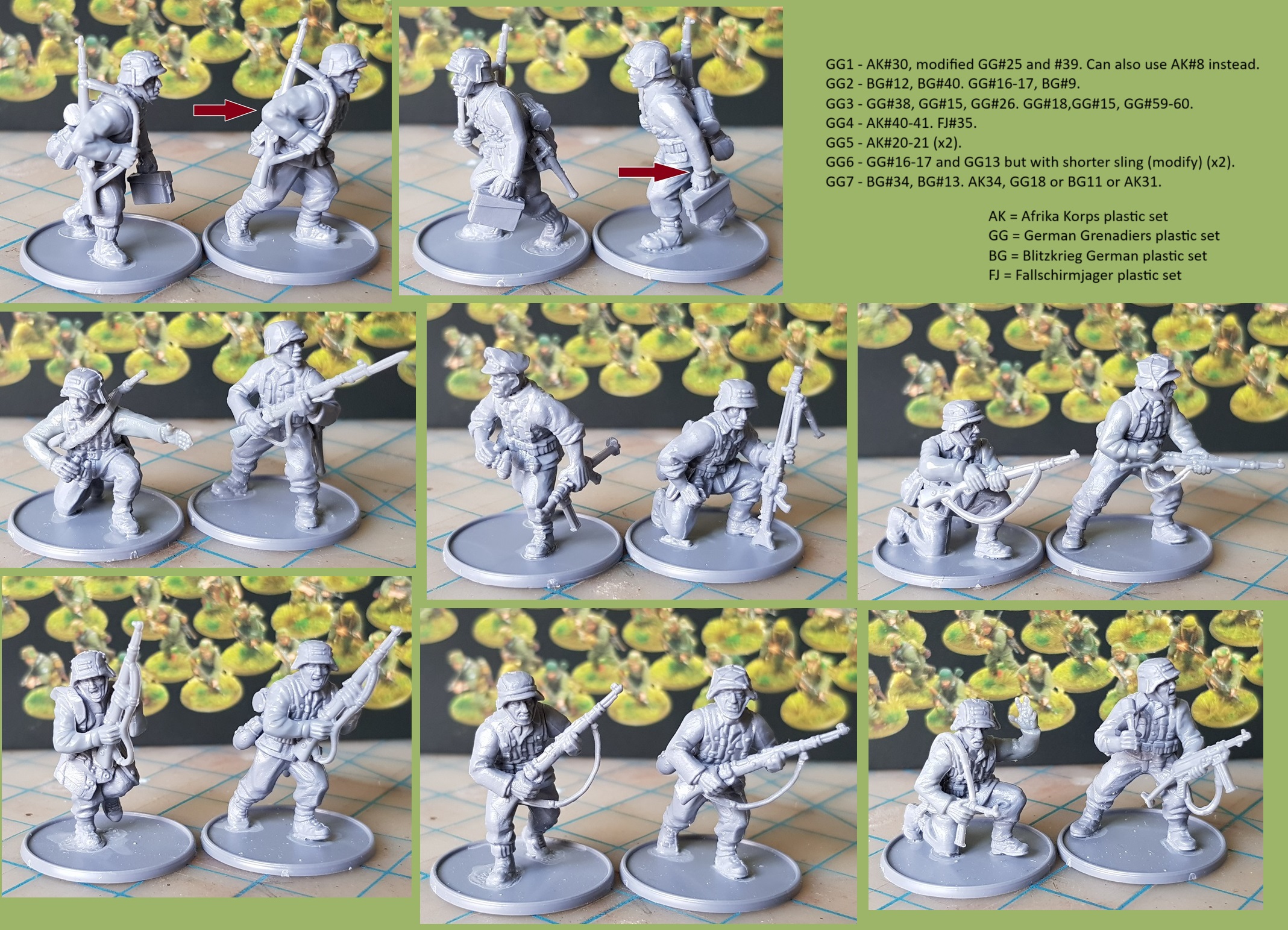
I am trying to build some Italy German forces and use some of the captured and also German built vehicles and the army builder app has no support for captured vehicles from Italy? is this an oversight or an omission? there seem to be a lot of French conversions or even Cech but help me out Warlord army builder app
I was looking at my current K47 items for the British and I have a Grizzly Medium Walker but that is not listed in the new British Army List, I hope it will appear in the future. The model is listed in the Warlord Game shop for the British. I don’t see a similar unit that I could proxy for without a lot of conversion. Any suggestions?
Attachments:
We are currently commemorating the 50th anniversary of the Battle of Kołobrzeg, fought by the 1st Polish Army in March 1945. It was bloody but victorious for the Polish armed forces, which were being reborn alongside the Red Army. In this article, I would like to recall one of the Polish infantry divisions that fought for Kołobrzeg, immortalized in the war film “Jarzębina Czerwona” (“Red Rowan”). The political history of these events is complicated, but this does not diminish the heroism and sacrifice of the ordinary soldiers who paid a tribute of blood for the decisions of politicians and commanders.
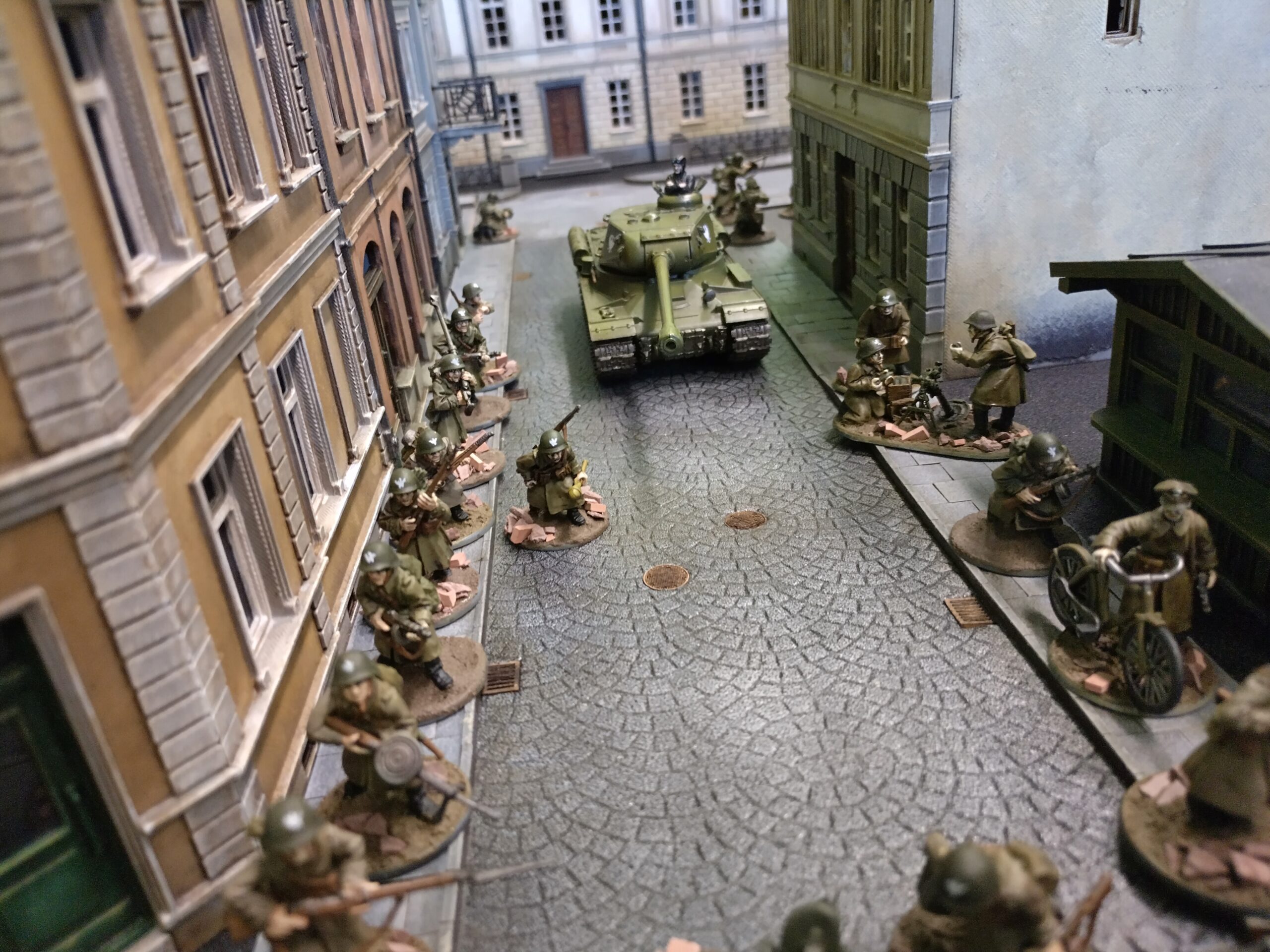
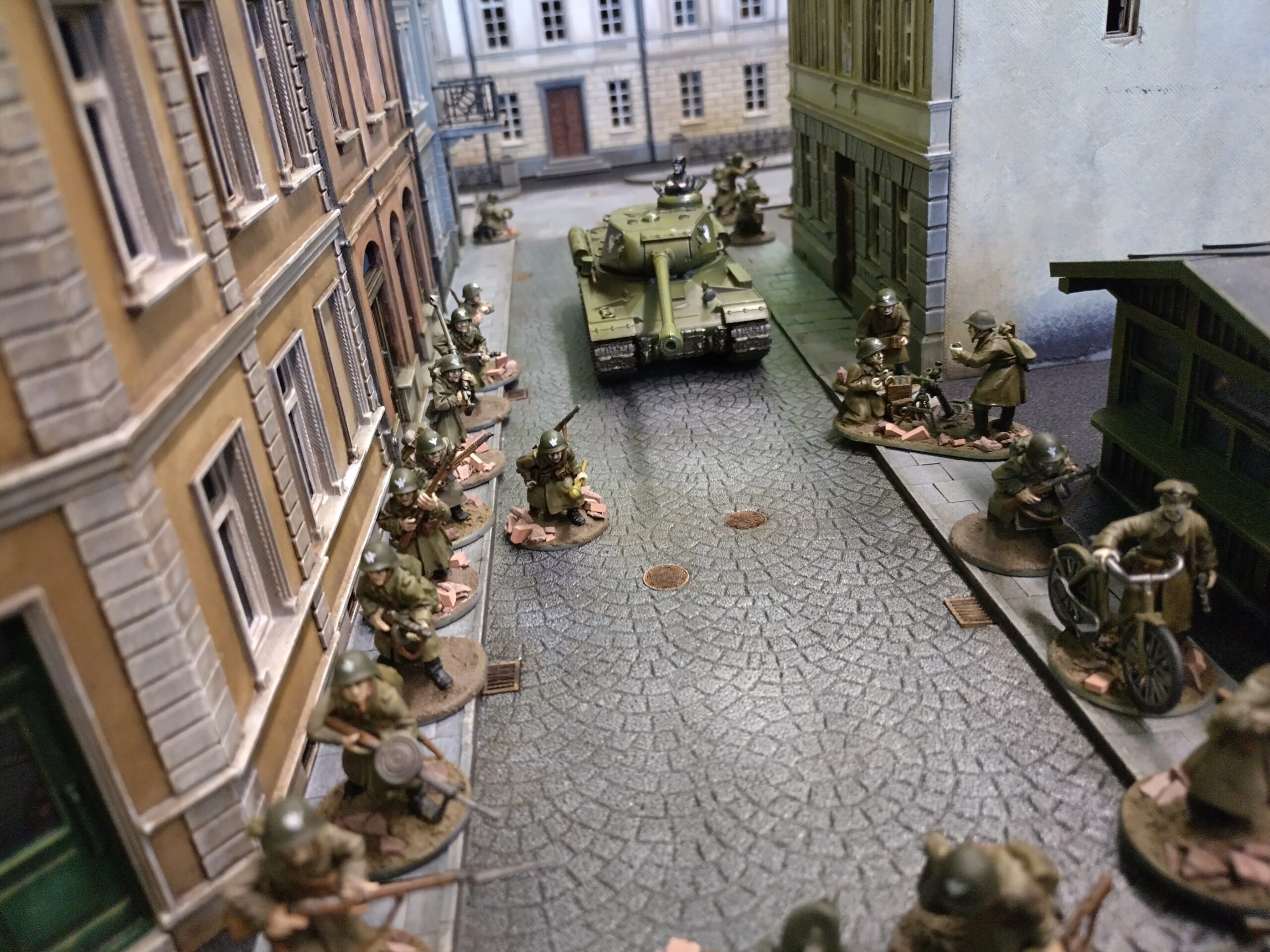
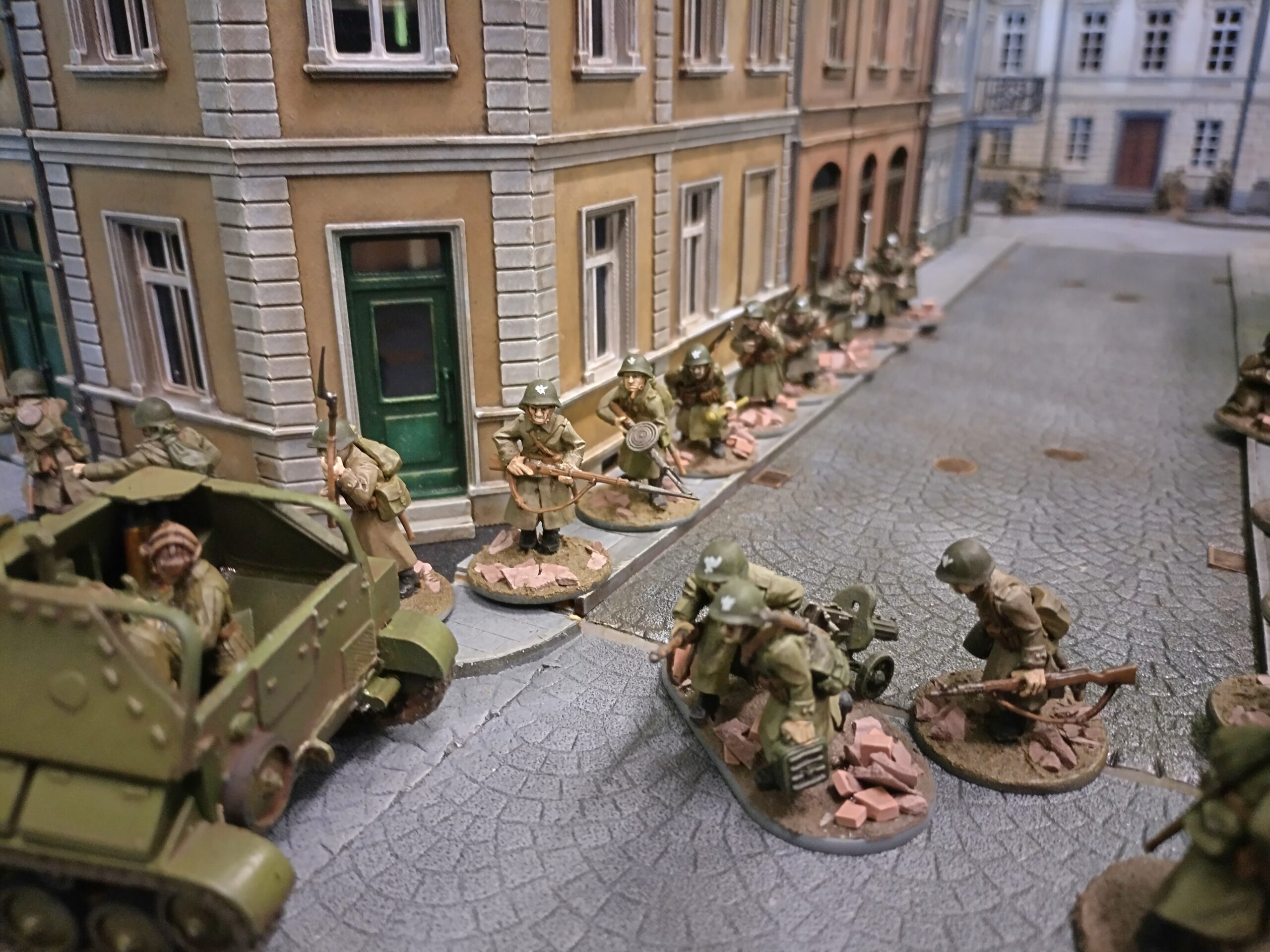
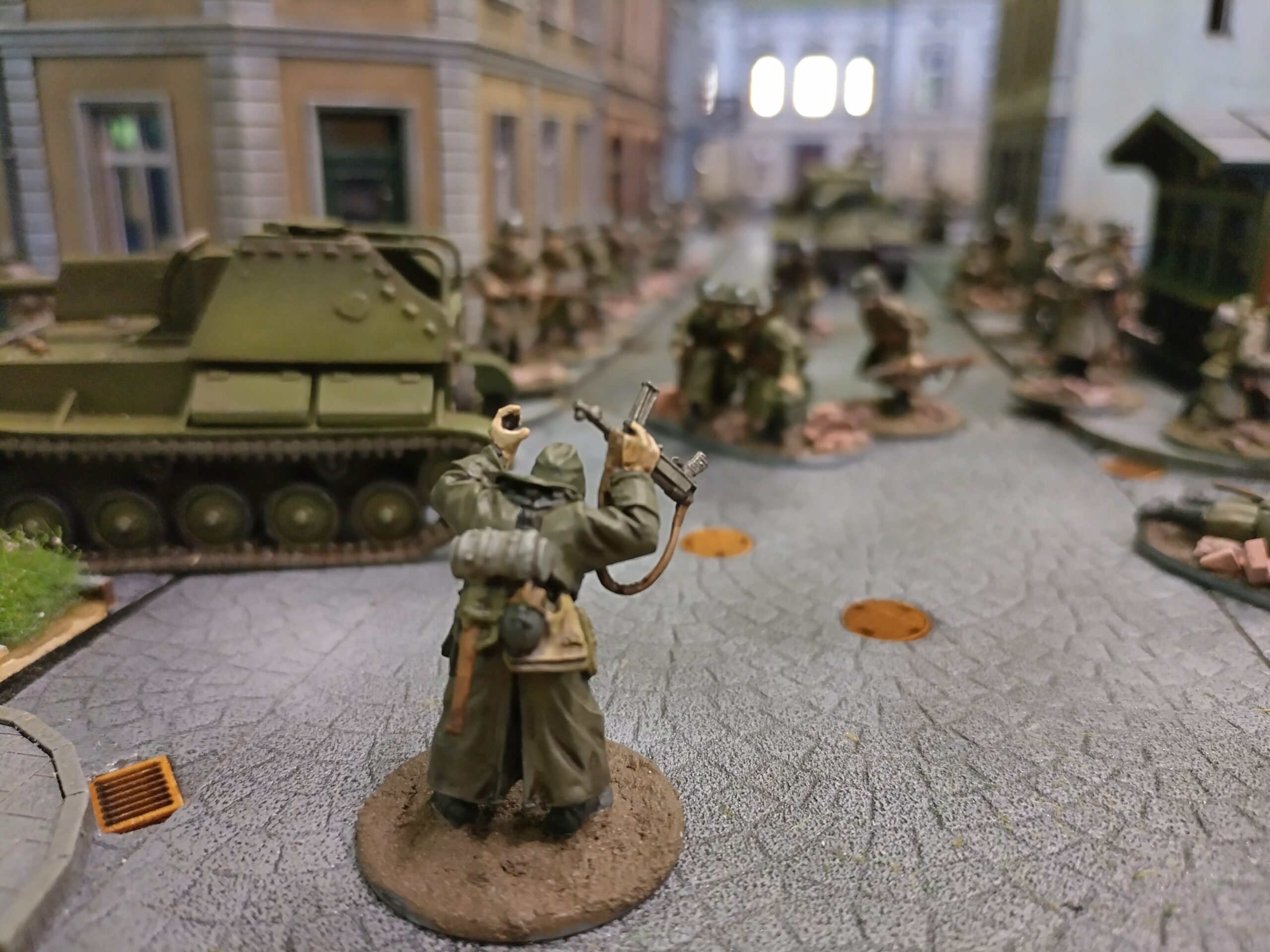
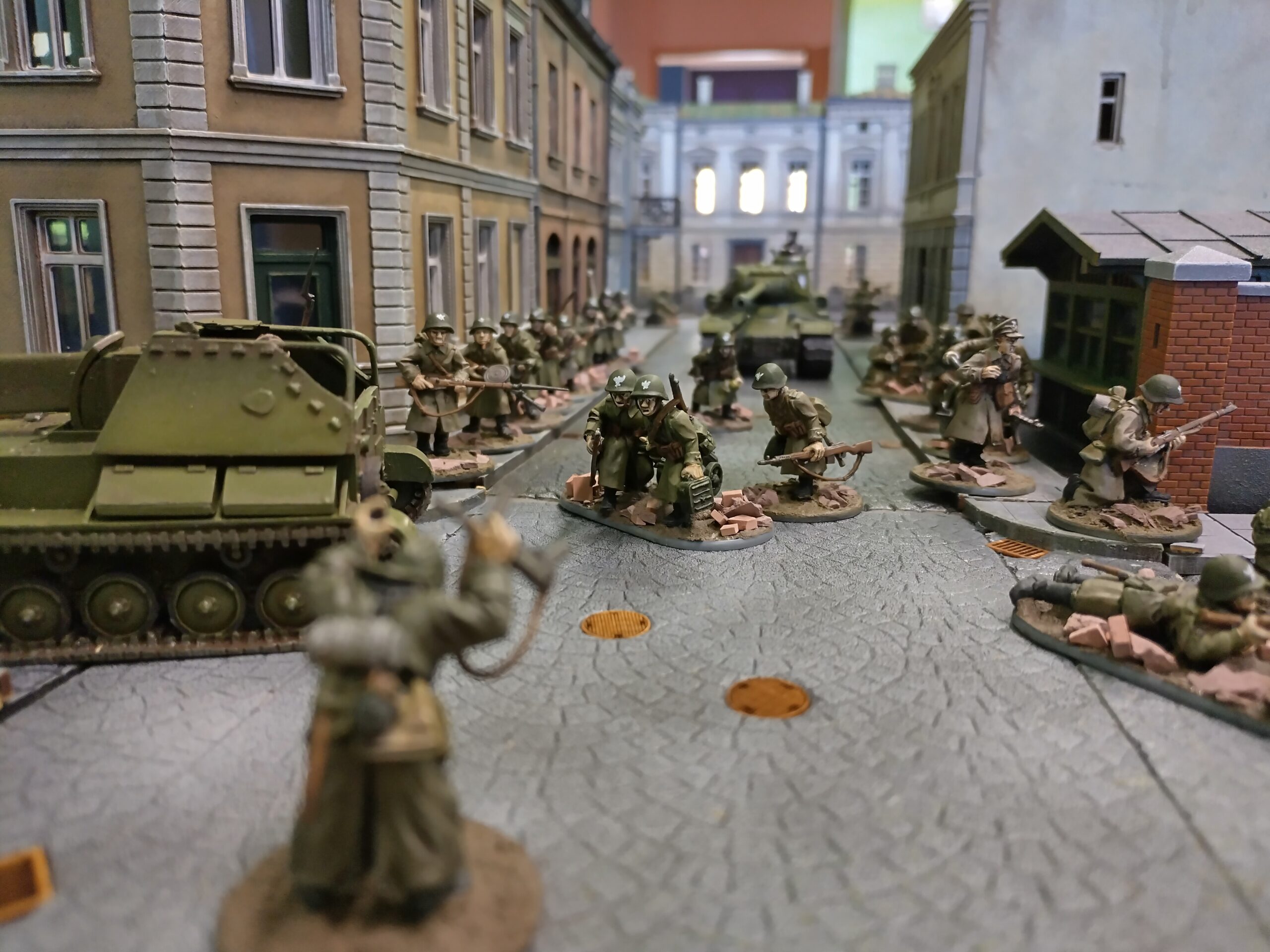
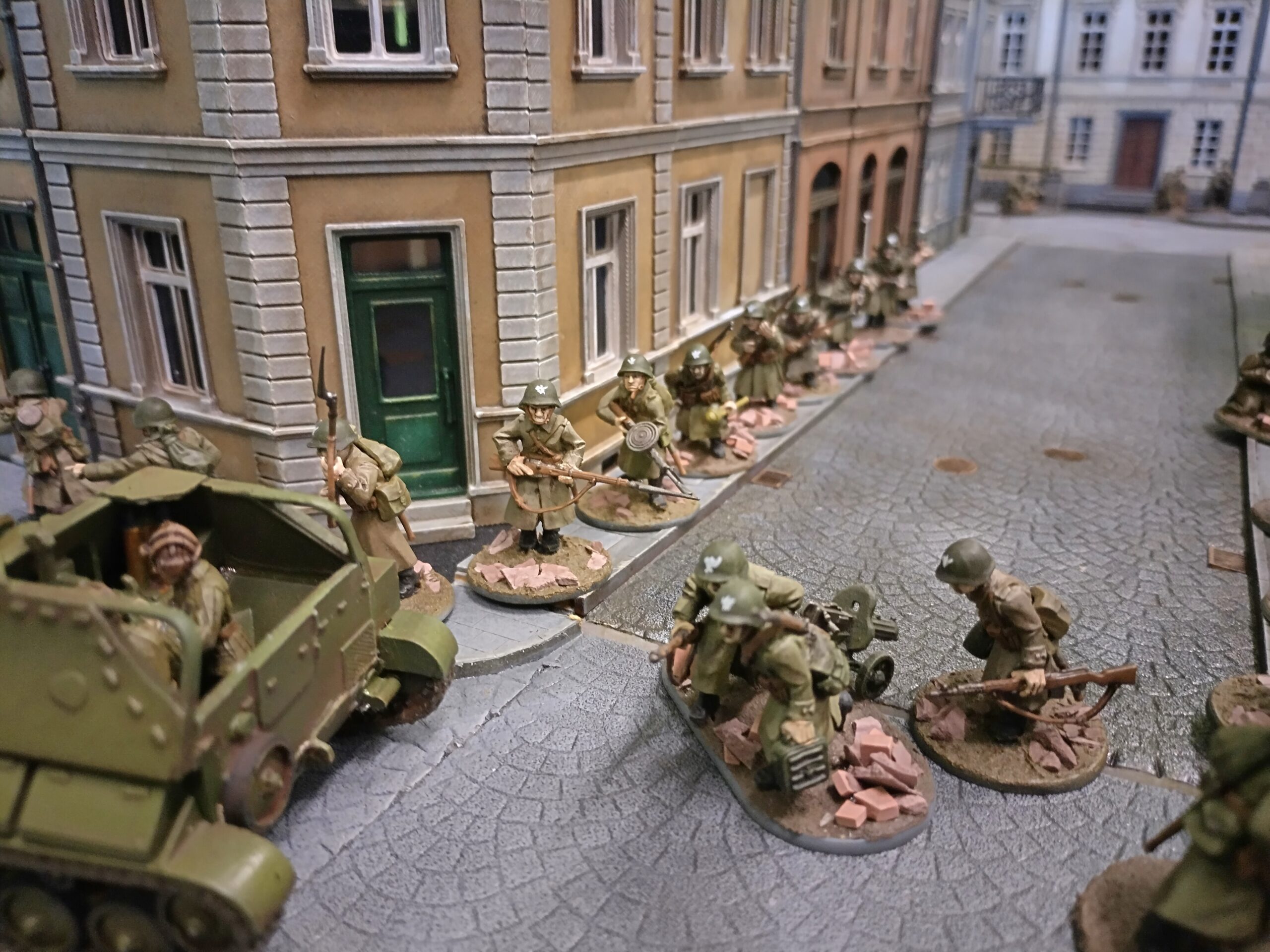
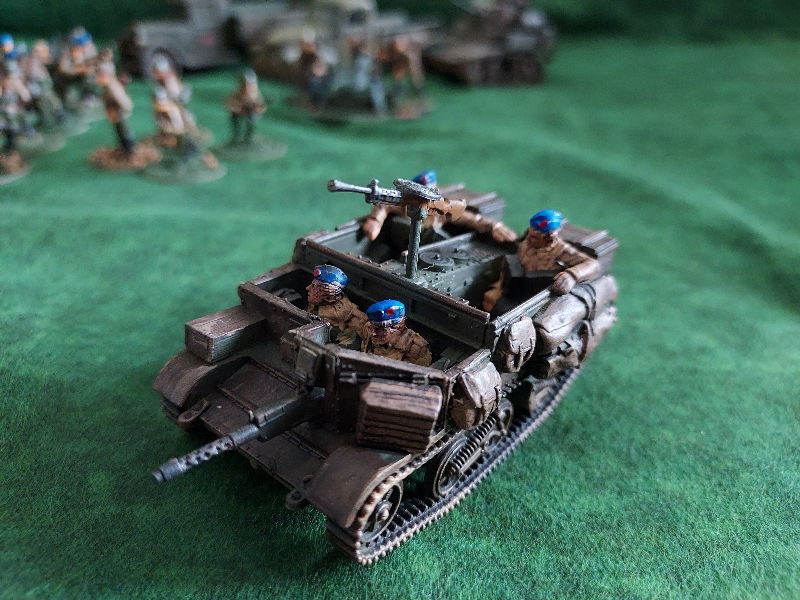
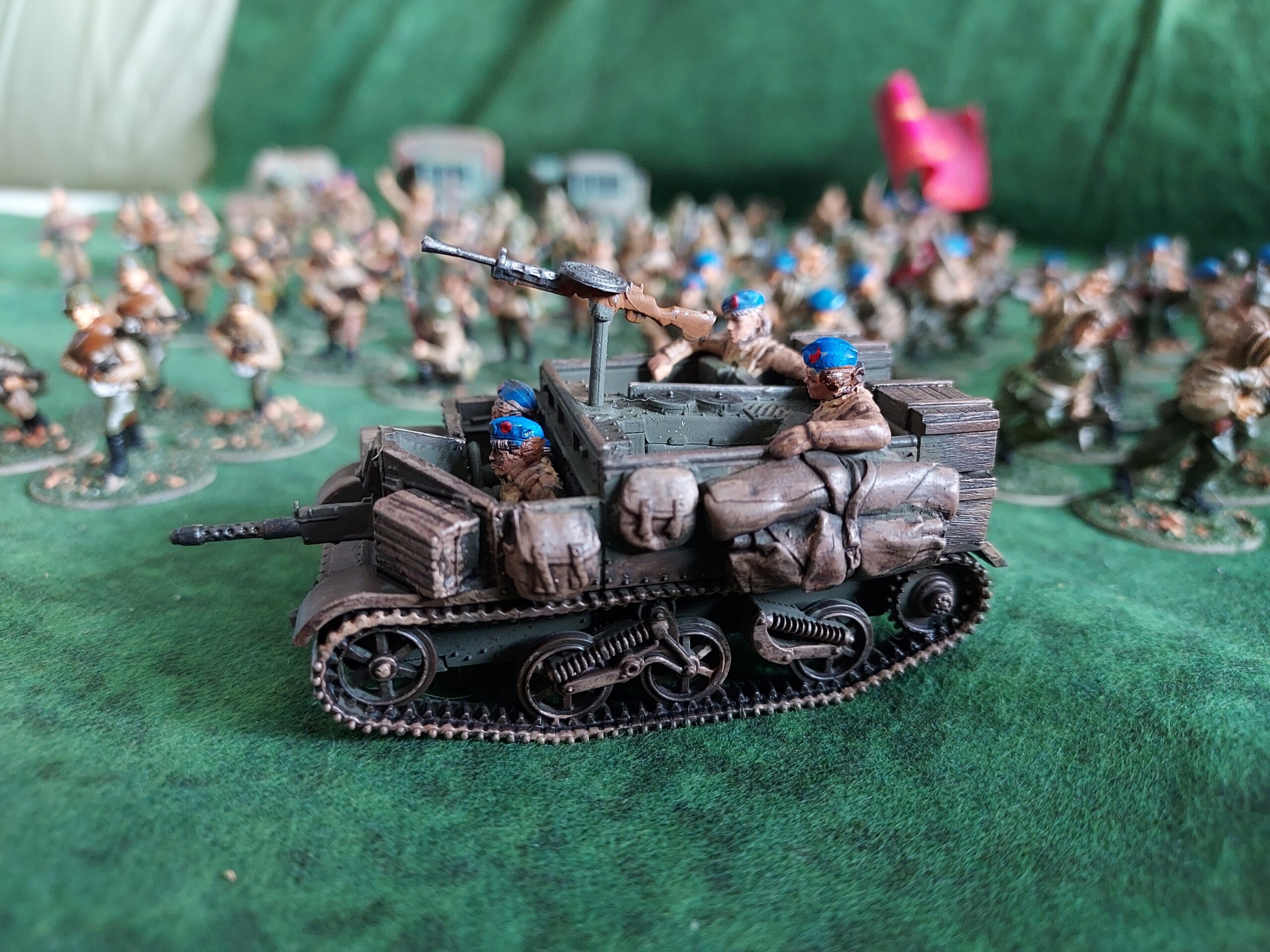
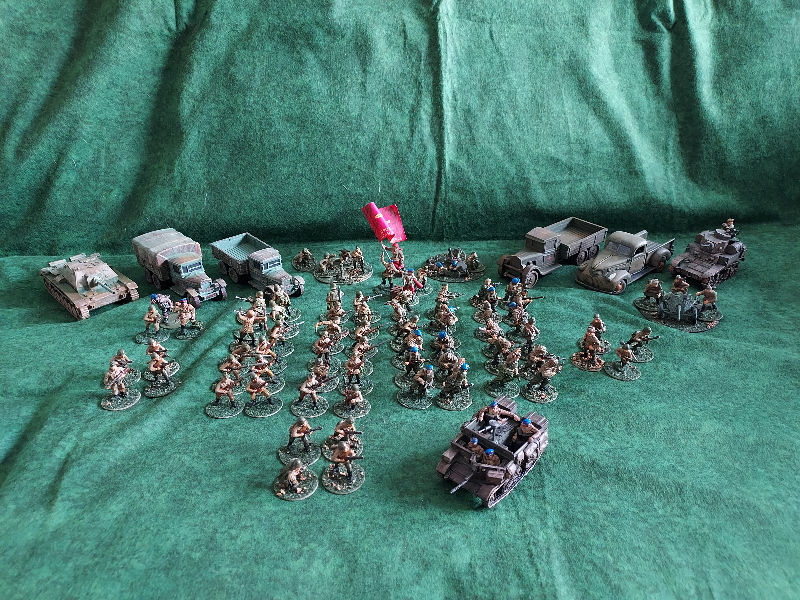
As I am a Polish Bolt Action player I always wanted to play using Polish Armed Forces units with their historical equipment and uniforms. Sometimes such a desire needs some conversions of models and soldier figures. In this article I want to show how I converted some metal figures from Warlord Games range using plastic and resin parts to obtain miniatures of the Polish 6th Infantry Division of the Polish People Army (Ludowe Wojsko Polskie – LWP). And I want to give you some additional rules to make this forces very special and unique.But first… some history for nerds. On September 17, 1939 the Red Army of Soviet Russia crossed Polish borders and started aggression against their neighbouring country with slogans of “friendly help” and “peace operation” (sounds familiar?…). As Poland crushed, millions of Polish citizens came under soviet occupation. Hundreds of thousands of them were arrested and sent deep inside Russian territory – into the cold and hostile Siberia. Their only fault was the fact that they were Poles. They were sentenced to hard, murderous work, which resulted in deaths of tens of thousands of peoples. Paradoxically, it was the Nazi attack on the USSR that gave them the chance to break out of hell. Since now Poland and Soviet Union had common enemy, their authorities signed an agreement. Owing to this an army of former Soviet prisoners was raised under the command of general Władysław Anders. However due to political conditions this army left the USSR in 1942. But still there were thousands of Poles in Siberia, who did not manage to get out the Soviet hell on earth on time.
In April 1943 Polish Government in Exile broke up diplomatic relations with Stalin because of so called “Katyń case” (over 20.000 Polish citizens – among them officers/prisoners of war – were murdered by NKVD on Stalin’s order in the Spring of 1940). Polish communists in Moscow took advantage of this opportunity and proposed to the Soviet leader creating a new Polish military formation – this time completely under the Red Army command. So it was – the 1st Polish “Tadeusz Kościuszko” Infantry Division was raised in Sielce on the river Oka in the nearby of Riazań. Further units (among them 2nd, 3rd, 4th Infantry Divisions and the tank brigade) were created in Sielce and then on Ukraine – closer to the former Polish border – in the region of Sumy near Kharkow and Żytomierz.
The 1st Army of the Polish Forces eventually consisted of five infantry divisions of which the 6th was the youngest. It consisted of the 14th, 16th and 18th Infantry Regiments and began to be organized on July 5, 1944. Mostly Poles that lived in Ukraine in the vicinity of Żytomierz were conscripted into the Division ranks. Commanders and senior officers were attached from the Red Army, because of the lack of Polish officers and instructors murdered by Russians in Katyń. Only junior officers and NCOs were Poles, hastily educated on Soviet war courses. By late August 1944 all troops were relocated to Przemyśl for battle training and replenishing the men and equipment. The Division was considered battle-ready in late December (however it still lacked 13 SU-76 SPG and over 300 trucks) and was transferred to Mińsk Mazowiecki, where it took part in Soviet January Offensive, eventually entering ruins of Warsaw.
Next the 6th Division played important role in breaking so called Pomeranian Wall but its main achievement was taking Kołobrzeg (with the rest of 1st Polish Army) in a tough-street-fighting battle between 7 and 18 March 1945 that was later called the greatest battle of the Polish Forces on the eastern front. Since the 6th Infantry Division was newly formed and had never participated in major battles before, no one knew how its soldiers would perform in harsh and devastating city fights. At times they displayed enormous bravery, but in other moments they broke down mentally and succumbed to fear.
In the battle of Kolberg 6th Infantry Division suffered monstrous losses – over 40% of the initial strength in dead, wounded and missing soldiers. After the victory the Division spent a few weeks at the same place resting and resupplying and moving back into action in April’45 to take part in a final chapter of the 2nd World War in Europe.
But this is another story…
In 1969 a couple of Polish movie makers Ewa and Czesław Petelski filmed a dramatic vision of the fights in Kołobrzeg in March 1945. You can find this movie entitled “Jarzębina czerwona” on youtube and it depicts the deeds of the company of the 14th Infantry Regiment of the 6th Infantry Division during this battle. “Jarzębina” (“Rowan”) was the radio code name of this company and the movie became an inspiration for me…
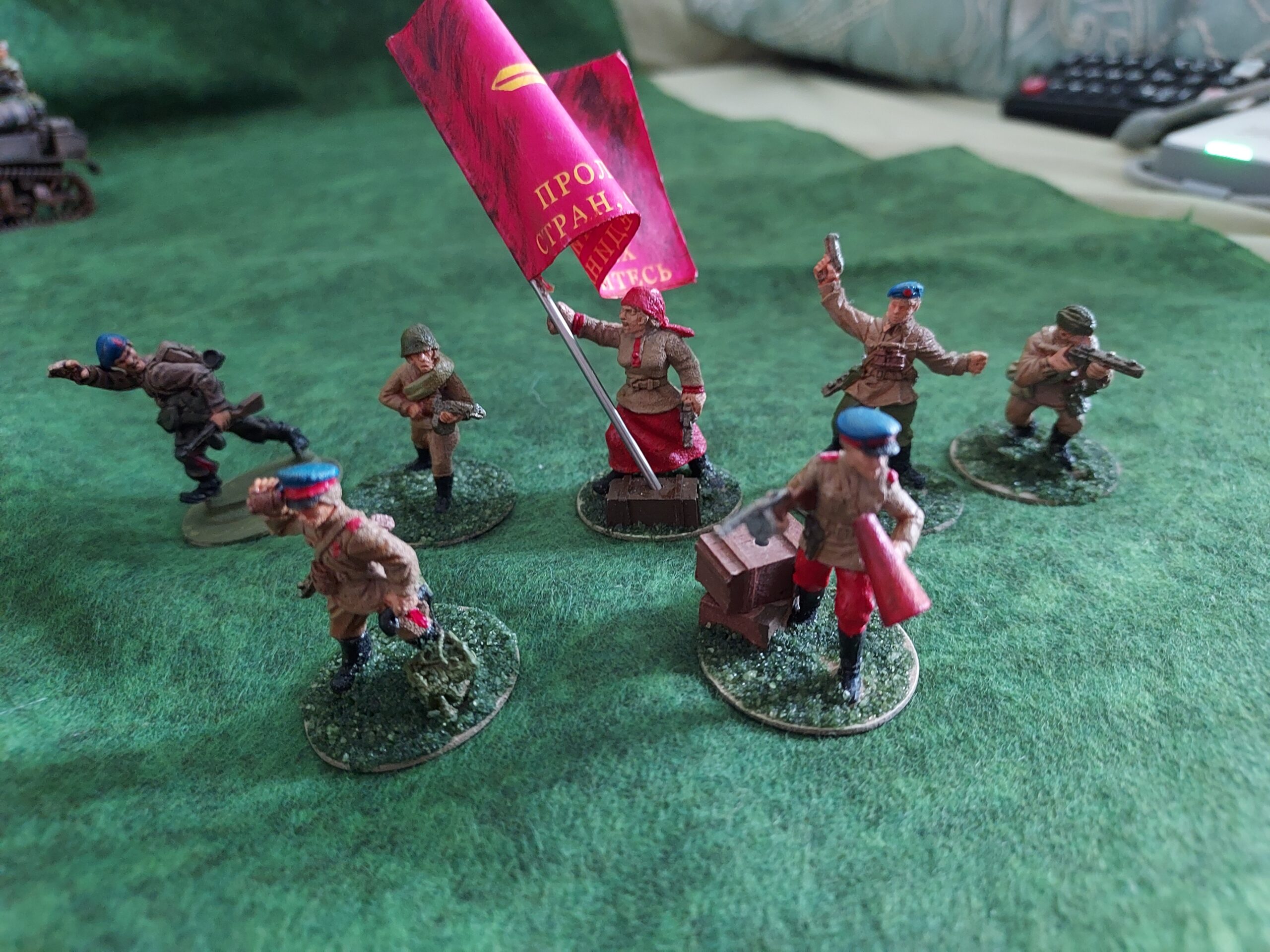
So called the Polish People’s Army rarely used Soviet uniforms. Instead Stalin ordered to sew new uniforms based on saved examples of the original Polish uniforms from the September 1939. And so I could act in the same manner – use some Polish figures from Warlords range – especially those in long coats. Sometimes it was quite possible to use even some German or Soviet metal figures – when it was not visible enough, that their great coats did not have just one but two button rows (hook fastening in Soviet case). The main conversion was switching their weapons, giving them Soviet armament and some additions from plastic soviet frames. Polish bread bags were very similar (at least to my eye) however it was necessary to cut off gasmask containers. In 1939 the Poles had 3 part ammo pouches and Soviets only 2 piece – I decided not to correct them as it could damage the figure. I used plastic heads in Soviet helmets SSz-40 (СШ-40) and metal polish field cap (Rogatywka). And so it was! As for the 6th Infantry Division and battle of Kolberg in the March 1945 I added some bricks and debris on bases and set out for first fight.
LWP 6th Infantry Division Late War force selection guide
Special Rules
Forward Artillery Doctrine
The Soviet military doctrine provided the use of artillery to directly support infantry on the first front line, which was quite an effective solution when breaking the enemy’s defenses, but also caused huge losses among artillerymen.
In the first turn of the game any anti-tank gun or field artillery piece in LWP 6th Division Army List (except for Heavy Artillery) may move through the difficult ground in the same manner as infantry.
For the Motherland
Polish soldiers broke free from the hell of the German occupation and Soviet gulags to fight for the freedom of their homeland and the fate of their families. Their determination and willpower to fight were steadfast.
Whenever a Polish unit fails a morale check and would otherwise be destroyed as a consequence, take the test again and apply this second result. This re-roll applies to all the units facing this situation (including infantry, artillery and vehicle that suffers an On Fire damage result).
Infantry units
HQ teams
– Platoon Commander
– Politruk (from Campaign Stalingrad)
– Medic
– Chaplain
[Traditional Polish society had very little acceptance for communist propaganda and was very religious; because of this Stalin accepted presence of catholic chaplains in Division ranks, however political officers did their best to convert soldiers into loyal communists.]
– Forward Observer
Infantry squads & teams
– LWP Late war Infantry squad (see rules below)
– SMG squad (up to 9 men in squad and Trial by Fire rule)
– Sappers demolition squad (see rules below)
– Storm Group squad (from Campaign Stalingrad)
[The chroniclers of the battle mention ad hoc assault groups composed of the most experienced and the bravest infantrymen and sappers equipped with explosives.]
– Machine gun team
[The division’s only anti-aircraft cover was provided by a dozen HMGs on AA mounts. However it was no longer the period when Luftwaffe dominated in the air.]
– Mortar team
– Sniper team
– Anti-tank team (Anti-tank Rifle team, Tank Hunters anti-tank team – up to 2 men in team)
Artillery units
Anti-tank guns
– Light anti-tank guns, ZIS-3 medium anti-tank guns
Field artillery
– Howitzers (light, medium, heavy)
[The artillery of the 6th Infantry Division consisted of 75mm regimental guns, 45mm anti-tank guns, ZiS-3 division guns and 122mm M-30 howitzers. During the fighting in Kołobrzeg, Division was supported by the units of heavy artillery, including those armed with a 152mm cannon-howitzers.]
Vehicle units
Tanks
– IS-2 heavy tank
Self-propelled Artillery
– SU-76 Self propelled gun
[The 6th Division did not have its own armoured vehicles, but it was supported by the IS-2 tanks of the 4th Heavy Tank Regiment and perhaps by some SU-76 SPG of the armored artillery squadrons belonging to the 3rd or 4th Infantry Division.]
Transports & tows
– Trucks (0-1)
– GAZ/Jeep (0-1)
– Artillery tractor
– Horse-drawn limber
[When it set out to fight in December 1944, the Division had not enough cars to transport its own troops and most of the artillery had horse traction. Sufficient supplies were barely delivered. Even when huge numbers of German trucks were seized in Kołobrzeg, the missing transport equipment of the Division was not filled with them.]
LWP late war Infantry Squad
Although they were freshly formed and poorly trained, Polish Infantry Divisions were organized as Soviet Guards Division, receiving better equipment than ordinary Strielkovy Divisions. In 1944, the production of Mosin rifles was sufficient enough to become again the main weapon in the hands of infantry.
Cost: Inexperienced Infantry 35pts or Regular Infantry 50pts
Composition: 1 NCO and 5 men
Weapons: Rifles
Options:
- Add up to 3 additional soldiers with rifles at +7pts each (Inexperienced) or +10pts each (Regular)
- NCO and up to 2 soldiers may have a submachine gun instead of a rifle for +4pts each
- Up two soldiers may have a LMG for +15pts each – for each LMG included another soldier becomes loader
- The entire squad may have anti-tank grenades for +2pts per model
Special Rules:
- Trial by fire (see below)
- Tank hunters (if anti-tank grenades taken)
LWP Sappers Squad
There was the 13th Sappers (i.e. Engineers) Battalion in the division and also every infantry regiment had its own sappers platoon. Their main job was destroying of engineering obstacles, removing mines and constructing river crossings. Sappers frequently formed parts of the storm groups using their explosives to remove barricades and to destroy bunkers.
Cost: Regular Infantry 44pts
Composition: 1NCO and 3 men
Weapons: Rifles
Options:
- Add up to 4 additional soldiers with rifles at +11pts each
- NCO may have a submachine gun instead of a rifle for +4pts
- One soldier may have a flamethrower instead of rifle for +30pts – another soldier becomes assistant
- One soldier may have a (captured) panzerfaust in addition to other weapons for +15pts
- One soldier may have a demolition charge (if flamethrower is not taken) in addition to other weapons for +20pts
- The entire squad may have anti-tank grenades for +2pts per model
Special Rules:
- Trial by fire (see below)
- Tank hunters (if anti-tank grenades taken)
- Engineers
Trial by fire – when the unit with Trial by fire rule for the first time goes under fire or close quarter fight, its controller roles a D6. On a result of 1 – squad loses its will to fight and gains Shirkers. On a 2-4 squad remains the same. On a 5-6 soldiers are filled with patriotic bravery and became Stubborn. Then controller rolls again a D6. If the result of the second roll is 6, unit became Fanatics.
LWP 6th Infantry Division Special Character:
Gunner Ewelina Nowak – medic
One of the most heart-wrenching stories from the events of Battle of Kołobrzeg is the one, that tells about Ewelina Nowak, 20-years old Polish girl from small village on Polish-Ukrainian border. She survived years of Soviet and later German occupation, as well as the genocide of Polish citizens carried out by Ukrainian nationalists in 1943-1944. In the summer of 1944 when Soviet Red Army again took over West Ukraine she was conscripted into Polish Army in the East and became a female soldier of the 14<sup>th</sup> Infantry Regiment. She was sent for medical training and then with her unit she took part in the liberation of Warsaw in January 1945, battle on so called Pomeranian Wall and finally she served during the Battle of Kołobrzeg.
She was extremely well-liked by her fellow soldiers for her dedication and sacrifice. She died on March 13, 1945, from a German sniper’s bullet, while crawling under enemy fire to save a wounded soldier. She was buried two days later with full military ceremony. After the war, she became a symbol of all Polish women fighting on the fronts of World War II, and her deed was commemorated with the Monument to the Female-Medic in Kołobrzeg, erected in 1980.
Cost: Medic 28pts (Regular)
Composition: 1 Ewelina Nowak
Weapons: None
Special Rules:
- She acts as a medic but if she fails the D6 roll for ignoring damage she can immediately re-roll. If the second roll is 6, that damage is ignored and does not cause a casualty.
And here are some photos of the 6th Infantry Division for Bolt Action.
Not sure where else to post this question here but I am wondering if there are plans to re stock the ACW Epic Iron Brigade set please? I have been searching around the numerous stores to no avail and asked in the forums if anyone has a spare box they wish to sell? Warlord showed them out of stock some time back and I subscribed to get a back in store notification but they seem to have disappeared from the page now!
I’m only doing single base units (but lots of them) and the Black Hat boys would be really useful to add. Can anyone her help with some info?
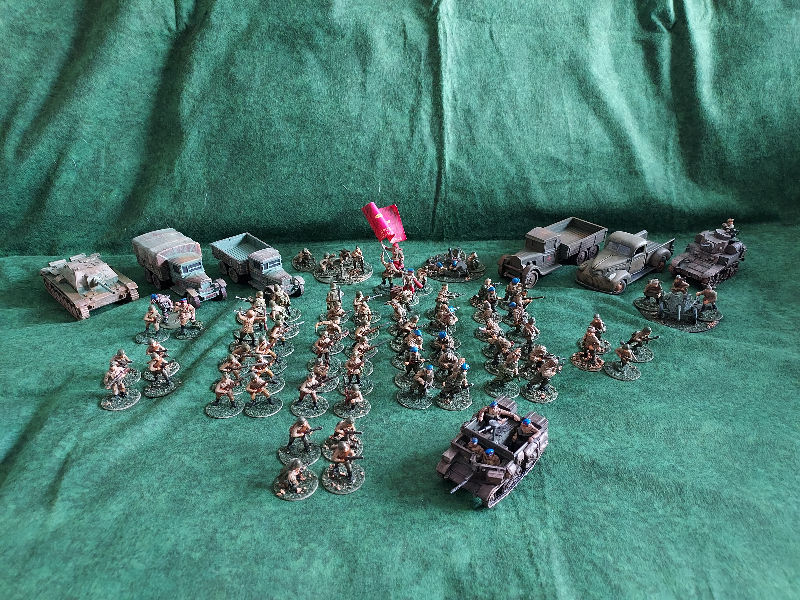
Below, some of my bases so far, a few conversions – cut down hats to kepis, standard bearer/officers from standard strips and Reb Zouaves with head swaps to add a few straw boaters 🙂

 Cheers,
Lee.
Topic: 1866 & needle guns etc